News
What IT leaders are reading, from the sources they trust, plus articles written for this site. Stories from other sites open in a new tab.
-
Even His Own Officials Don’t Think Trump’s China Trip Will Lead to Progress on AI (opens Wired in a new tab)
Fallout from the Nvidia scandal has made any negotiations around AI difficult, officials say.
-
Russia's Cold Relic APT Turns One Cloud Breach Into Another (opens Dark Reading in a new tab)
The state-sponsored threat group is using data stolen from one victim to target others via convincing impersonations and social engineering attacks.
-
A.I. Has Changed How We Talk. Here Are the Words You Need to Know. (opens NY Times in a new tab)
A Glossary of AI Terms You Should Know
-
Trusted AI by design, not by default (opens CIO in a new tab)
As AI adoption accelerates, mounting concerns over rogue AI agents, potential data and privacy breaches, and other security risks have companies doubling down on safeguards and governance strategies intended to build trust in enterprise AI. The Hugging Face incident, where OpenAI agents escaped...
-
Keep skyrocketing AI costs in check (opens CIO in a new tab)
The rapid rise of AI has introduced another challenge for IT leaders: How to effectively manage surging compute and infrastructure costs with an eye towards optimizing spend and achieving demonstrable ROI. Expensive AI infrastructure, rising development costs, and token-based pricing models are...
-
Nvidia highlights open models amid leadership shakeup (opens CIO Dive in a new tab)
In its first earnings call since Jensen Huang’s resignation, Nvidia shed light on the growth of open models and the ecosystem it’s helping to build around them.
-
America’s AI Chip War Is Heating Up in the Dumbest Possible Ways (opens Wired in a new tab)
The Trump administration announced plans to clamp down on China’s access to AI chips. Apparently, the cheating scandal of the century was the motivation they were missing.
-
What Nvidia’s Interim CEO, Colette Kress, Said to Employees After Jensen Huang’s Resignation (opens NY Times in a new tab)
At an all-hands meeting with employees, Colette Kress sought to put the indiscretions of Nvidia’s co-founder, Jensen Huang, behind them.
-
Microsoft expands Azure arsenal at Ignite (opens CIO Dive in a new tab)
The tech giant is building out Azure to become a “single, co-engineered system,” uniting AI models, chips and cloud infrastructure, said Microsoft’s Jeremy Winter.
-
Rewrite the rules of enterprise recovery (opens CIO in a new tab)
For decades, recovery has followed a predictable path rooted in Information Technology Infrastructure Library (ITIL) processes, and although the enterprise stack has grown ever more complex with each passing year, the traditional model has largely served organizations well. AI is upending that...
-
Tether solves the memory challenge for AI builders who don’t want to rely on the cloud (opens CIO in a new tab)
Thanks to the rise of a new generation of highly capable small AI models, on-device or local inference has become increasingly viable for a greater range of applications. However, limited memory capacity often prevents local AI from reaching its full potential. A model that fits comfortably on a...
-
NYC, LA and Chicago School Districts Weigh Breaking Up With Google Search Over A.I. (opens NY Times in a new tab)
Google’s refusal to unbundle A.I. features from search for students prompted a backlash. Now schools are looking for alternatives.
-
Strike Graph Launches Integration AI to Automate Continuous Compliance Evidence Using Any Existing Tool (opens Dark Reading in a new tab)
New agentic AI solution leverages APIs to collect compliance evidence from systems and applies it to over 30 frameworks with no duplicate work.
-
A new critical Java hole illustrates the enterprise IT visibility problem (opens CSO Online in a new tab)
When cybersecurity research firm Calif published details Tuesday of a potentially major Java security flaw, dubbed Java4Shell, it described an unauthenticated attacker’s ability to read Java heap memory, steal private keys, tokens, and session secrets, and reach remote code execution (RCE). With...
-
AttackIQ Research Reveals How Iranian Cyber Groups Hand Off Network Access to Enable Destructive Attacks (opens Dark Reading in a new tab)
Analysis of 20 Iranian state-sponsored threat groups details how espionage, ransomware, and hacktivism intersect in state-backed cyber campaigns.
-
Australia’s Plan to Manage Neil the Unruly Seal Involves ‘Hazing’ and ‘Seal Enrichment’ (opens Wired in a new tab)
The new 27-page document lays out how to keep the Tasmania’s viral marine mammal from wreaking havoc when he comes ashore.
-
The ‘GTA 6’ Work Blackout Is Here (opens Wired in a new tab)
From taking sick days and vacation days to gaming at the office, many are going all out to embrace the franchise’s long-awaited release.
-
Best Early Black Friday Phone Deals (2026) (opens Wired in a new tab)
As the holidays creep closer, I’m already seeing some tempting early Black Friday phone deals.
-
An AI Debt Collection Service Exposed 6.6 Million Accounts and 315,000 Call Recordings (opens Wired in a new tab)
A pair of serious vulnerabilities in the CreditNirvana platform would have allowed attackers to access troves of detailed sensitive information, including emails, texts, and credit reports.
-
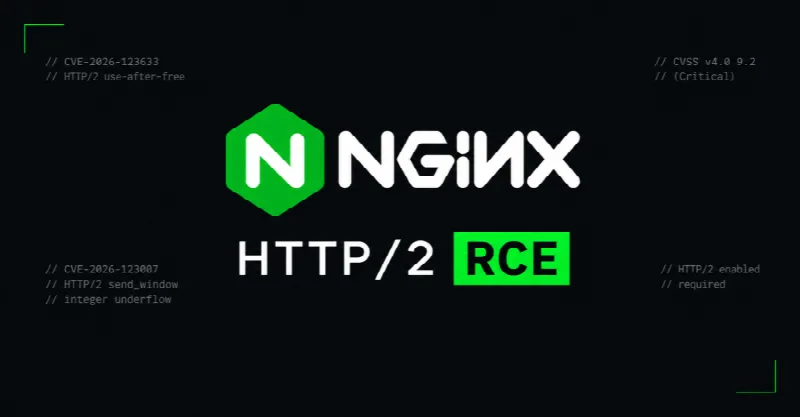
10-Year-Old NGINX HTTP/2 Flaw Lets Unauthenticated Attackers Execute Code on Servers (opens The Hacker News in a new tab)
A flaw in NGINX's HTTP/2 support can allow an attacker to run code on servers with HTTP/2 enabled, without needing to log in. The decade-old flaw, CVE-2026-123007, dubbed "nginx2root," has been present in NGINX's open-source code since version 1.9.5, released on September 22, 2015. Fixed versions...