News
What IT leaders are reading, from the sources they trust, plus articles written for this site. Stories from other sites open in a new tab.
-
N-able Patches 17 N-central Flaws as Attackers Exploit Earlier Bugs to Deploy Crypto Miners (opens The Hacker News in a new tab)
N-able has released a new security update to address additional critical security flaws impacting N-central. Describing N-central 2026.4 Hotfix 3 as a critical security update, the company said it includes a number of security patches and fixes that enhance the security of the Remote Monitoring and...
-
Madison Huang, Jensen Huang’s Daughter, Became a Powerful Force at Nvidia (opens NY Times in a new tab)
Installed as her father’s de facto chief of staff, Jensen Huang’s daughter alienated top executives. Now her lingering role poses a test for interim C.E.O. Colette Kress.
-
Google Project Zero Slashes Bug Disclosure Deadlines, Splitting Experts (opens Dark Reading in a new tab)
One of the oldest running bug disclosure programs announced it would shorten public disclosure timelines to vendors from 120 days to 30 over the next 14 months.
-
Data silos threaten banks’ competitive edge in AI (opens CIO Dive in a new tab)
Nearly three in four consumers using AI for banking tasks opt for ChatGPT, Claude or Gemini — almost double those using a bank's chatbot, a McKinsey report found.
-
Trump Administration Moves to Close A.I. Chip Loophole Ahead of China Trip (opens NY Times in a new tab)
The rules have been a topic of fierce debate in the administration and would cut back on a booming data center business serving Chinese companies.
-
Trump Administration Moves to Block China From Indirect Access to American AI Technology (opens Security Week in a new tab)
Under the new rule, overseas data centers that serve companies in countries including China, Russia, Iran and Cuba are required to identify their end users. The post Trump Administration Moves to Block China From Indirect Access to American AI Technology appeared first on SecurityWeek.
-
Ransomware Attacks Increase Behind AI, but Payments Decline (opens Dark Reading in a new tab)
Large language models and other AI systems allow a growing number of ransomware groups to create convincing phishing emails and identify sensitive data quickly.
-
California Sues OpenAI Over A.I. Safety Issues (opens NY Times in a new tab)
The state attorney general filed a lawsuit accusing the company of failing to put appropriate safeguards on its artificial intelligence and putting the public at risk.
-
'Sleeper Agent' Tactic Hides Payloads in Open-Weight AI Models (opens Dark Reading in a new tab)
Malware can lurk inside just 0.00001% of a neural network. How, then, can any user tell it's there?
-
Workstation pricing resets on January 1 (opens CIO in a new tab)
In this issue Every price action that took effect in October, and what landed as published Lenovo’s January 1 ThinkStation increase and the GPU costs behind it The effective dates and order deadlines already published through January 2027 One planning move: get more from the devices you already own...
-
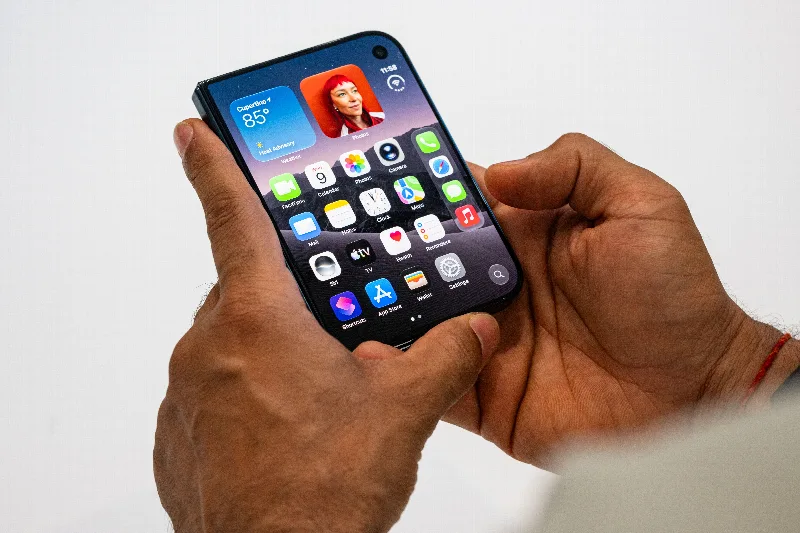
The iPhone Duo Is Getting a Limited Version of Face ID (opens Wired in a new tab)
Originally launching only with Touch ID, Apple’s folding phone now borrows a feature from the new HomeView and can recognize your mug, but it’s likely not as secure as Face ID.
-
Instagram Is Bringing Amazon Affiliate Links Directly to Reels and Posts (opens Wired in a new tab)
The Meta-owned social media platform now lets creators attach up to 30 affiliate links per Reel to make money from Amazon more easily.
-
Mitigate memory price increases with components harvested from retiring devices (opens CIO in a new tab)
The circular economy just picked up one of its strongest business cases yet, and it didn’t come from a sustainability mandate. It came from a memory shortage. An AI-induced memory shortage has pushed the price of new devices up, causing organizations to recalculate their repair-vs-replace...
-
AO3 Is Back. This Is Not a Drill (opens Wired in a new tab)
Following a weeks-long shutdown, the home to over 18 million works of fan fiction is back online, with some limitations.
-
China-Nexus Actors Breach 10 Organizations in AI-Driven Attacks (opens Dark Reading in a new tab)
Attackers used Cairn once again in autonomous attacks that targeted advanced manufacturing and defense sectors, as well as civil and human rights organizations.
-
Jensen Huang Is Gone. Now What? (opens Wired in a new tab)
After a shocking downfall, Nvidia’s CEO is out of a job. WIRED’s Lauren Goode explains what that means for the world’s most critical chip company, the AI industry, and Jensen Huang himself.
-
Agentic AI frameworks push hacking threat to ‘inflection point,’ Google warns (opens CIO Dive in a new tab)
The tech giant on Monday became the latest high-profile authority to warn organizations about a new generation of automated tools.
-
Just 400 US Data Centers Use More Electricity Than Michigan (opens Wired in a new tab)
New Harvard research shows that data-center power demand is outstripping states—and that doesn’t even include facilities with off-grid gas plants.
-
Typosquatters Target New Brand Domains Within 24 Hours of Registration (opens Infosecurity Magazine in a new tab)
Symantec said attackers are targeting new campaign sites registered by big name brands, with the lookalike domains enabling malicious follow-on activity